Have you ever typed “backseat” and wondered if it should actually be “back seat”? 🤔 You’re not alone!
Many English learners and even native speakers pause over this tiny but tricky spelling difference.
The confusion comes from how words evolve — some compound nouns merge (like website), while others stay separate (ice cream).
People search for “backseat or back seat” because they want to use the correct form in essays, emails, or professional writing.
Whether you’re describing a car’s interior or using it metaphorically (like “taking a back seat”), the spelling depends on context, region, and formality.
This article clears up the confusion with examples, comparisons, and real usage data — so you’ll never second-guess again. 🚗💨
Backseat or Back seat – Quick Answer
✅ Both spellings are correct, but they’re used differently:
| Usage | Correct Form | Example |
| As a noun (the place in a car) | Back seat | “She sat in the back seat of the taxi.” |
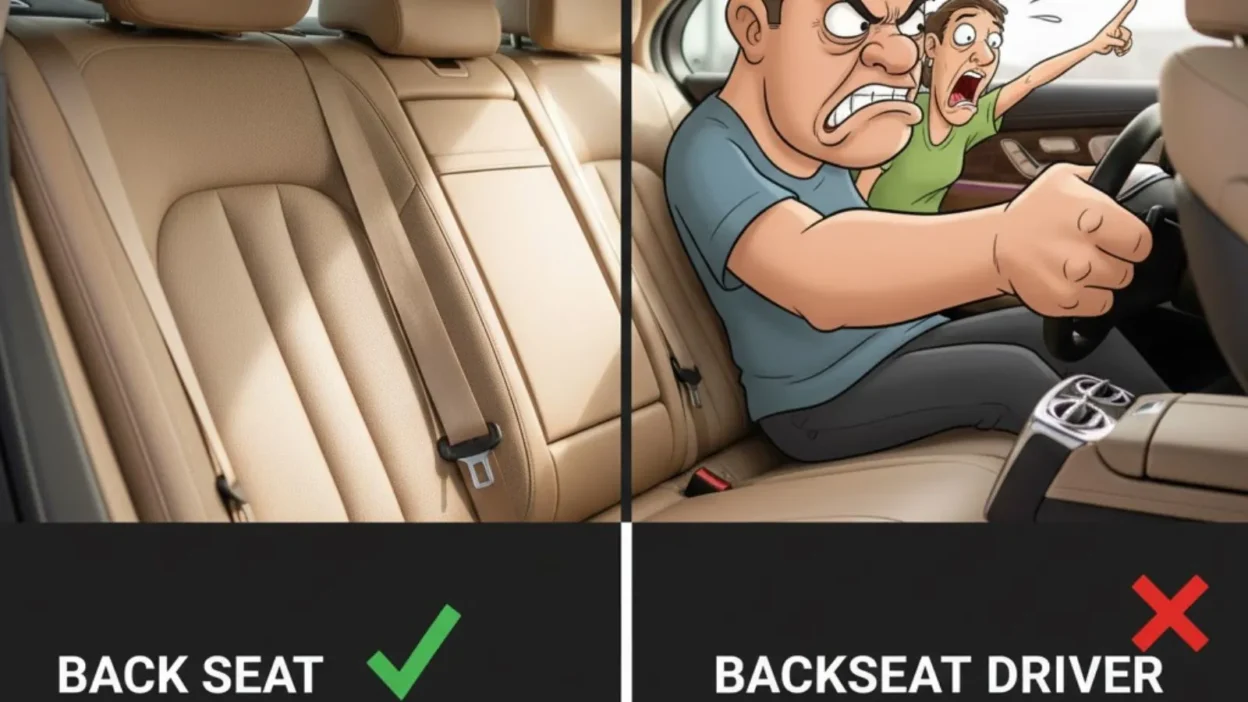
| As an adjective (before a noun) | Backseat | “He was a backseat driver.” |
👉 Simple Rule:
Use “back seat” when describing a physical seat.
Use “backseat” when describing a type of person, role, or action.
The Origin of Backseat or Back seat
The word “back seat” first appeared in the early 1900s when cars became common. It literally meant “the seat at the back.”
Over time, writers began joining the two words into “backseat”, especially in phrases like backseat driver or backseat politics, where it describes behavior rather than a literal seat.
This merging trend follows English’s natural pattern of combining frequently used phrases into compound nouns — like football, blackboard, or bedroom.
So, “back seat” is the original, literal form, while “backseat” evolved later for figurative and compound use.
British English vs American English Spelling
While both spellings exist in both dialects, Americans prefer “backseat” more often, and Brits tend to use “back seat.”
| Region | Preferred Spelling | Example Sentence |
| 🇺🇸 American English | Backseat (more common) | “She’s tired of being a backseat driver.” |
| 🇬🇧 British English | Back seat (more formal/common) | “The child was asleep in the back seat.” |
Rule of thumb:
- In formal UK writing, keep it as “back seat.”
- In modern US writing, “backseat” is accepted in both literal and figurative contexts.
Which Spelling Should You Use?
Your choice depends on audience and purpose:
| Audience | Recommended Form | Why |
| US readers | Backseat | Common in everyday writing, headlines, and online media. |
| UK/Commonwealth readers | Back seat | Matches traditional British grammar. |
| Global audience | Back seat | Universally understood and safe in formal writing. |
Pro tip: When unsure, use “back seat.” It’s always correct, whether you’re writing for a British or American reader.
Common Mistakes with Backseat or Back seat
Here are a few errors writers often make:
❌ “She was sitting on the backseat.” → ✅ “She was sitting on the back seat.”
❌ “He’s a back seat driver.” → ✅ “He’s a backseat driver.”
❌ “The baby’s toy fell off the backseat.” → ✅ “The baby’s toy fell off the back seat.”
👉 Remember:
- Use “backseat” when it’s part of a compound noun (like backseat driver).
- Use “back seat” when it’s just describing the location or object.
Common Mistakes with Backseat vs Back seat
❌ “She’s sitting on the backseat.” → ✅ “She’s sitting on the back seat.”
❌ “He’s a back seat driver.” → ✅ “He’s a backseat driver.”
❌ “The toy fell from the backseat.” → ✅ “The toy fell from the back seat.”
Remember:
Two words (back seat) = when it stands alone as a noun.
One word (backseat) = used before another noun.
Backseat or Back seat in Everyday Examples
| Context | Correct Use | Example |
| Email (formal) | Back seat | “Please check the item left on the back seat of the car.” |
| News article | Backseat | “He took a backseat role in the negotiations.” |
| Social media | Backseat | “I’m done being a backseat driver in my own life!” |
| Conversation | Back seat | “The kids are fighting in the back seat again!” |
| Essay | Back seat | “Passengers in the back seat are required to wear seatbelts.” |
Backseat or Back seat – Google Trends & Usage Data
According to Google Trends and language data:
- “Backseat” is more popular in the United States, Canada, and online platforms.
- “Back seat” is more frequent in the UK, Australia, and academic or formal contexts.
| Keyword | Global Popularity (%) | Main Regions |
| Backseat | 65% | USA, Canada, Philippines |
| Back seat | 35% | UK, India, Australia |
In short: online and modern speech favor “backseat,” while traditional and formal writing prefers “back seat.”
FAQs about Backseat or Back seat
1. Is “backseat” one word or two?
Both forms are correct — “back seat” (noun) and “backseat” (adjective or compound noun).
2. Which is more common in American English?
“Backseat” is more common in American writing and informal contexts.
3. Should I use “backseat” in formal writing?
Prefer “back seat” in formal documents, essays, and academic writing.
4. Why are both spellings used?
Because English allows flexible compound formations — frequent usage merges words over time.
5. Is “backseat driver” correct?
Yes! Always written as one word: “backseat driver.”
6. Is it okay to write “backseat of the car”?
It’s not wrong, but “back seat of the car” is grammatically preferred.
7. What part of speech is “backseat”?
Usually an adjective (“backseat driver”) or a compound noun in modern English.
Conclusion
So, when it comes to “backseat or back seat,” the right choice depends on context, audience, and tone.
Use “back seat” for literal meanings (the seat at the back of a car) and formal writing.
Use “backseat” for figurative or compound uses like backseat driver or backseat politics.
English keeps evolving — what’s two words today might be one tomorrow! But now that you know the rules, you’ll always pick the right form with confidence. 🚙✨
Discover More Articles
- 💡 101+ Cannot or Can not What’s the Correct Form? 2026
- 🙏 Worshipped or Worshiped Which Spelling Is Correct? 2026
- 🛠️ Duck Tape or Duct Tape What’s the Correct Spelling and Why It Matters? 2026
- 101+Homepage or Home page Which Is Correct? 2026