If you’ve noticed painful bumps or sores on your skin, you might wonder whether they’re ingrown hairs or herpes.
This confusion is common because both conditions can cause redness, swelling, and discomfort in sensitive areas like the bikini line, face, or genitals.
Many people search for “ingrown hair vs herpes” to understand the difference, avoid panic, and know when to seek medical care.
While ingrown hairs are usually harmless and linked to shaving or waxing, herpes is a viral infection that needs medical attention.
Knowing the difference helps you respond correctly, whether it’s simple self-care or professional treatment.
This article breaks down the distinctions in simple terms, so you can quickly spot the signs, avoid common mistakes, and gain peace of mind.
Ingrown Hair vs Herpes – Quick Answer
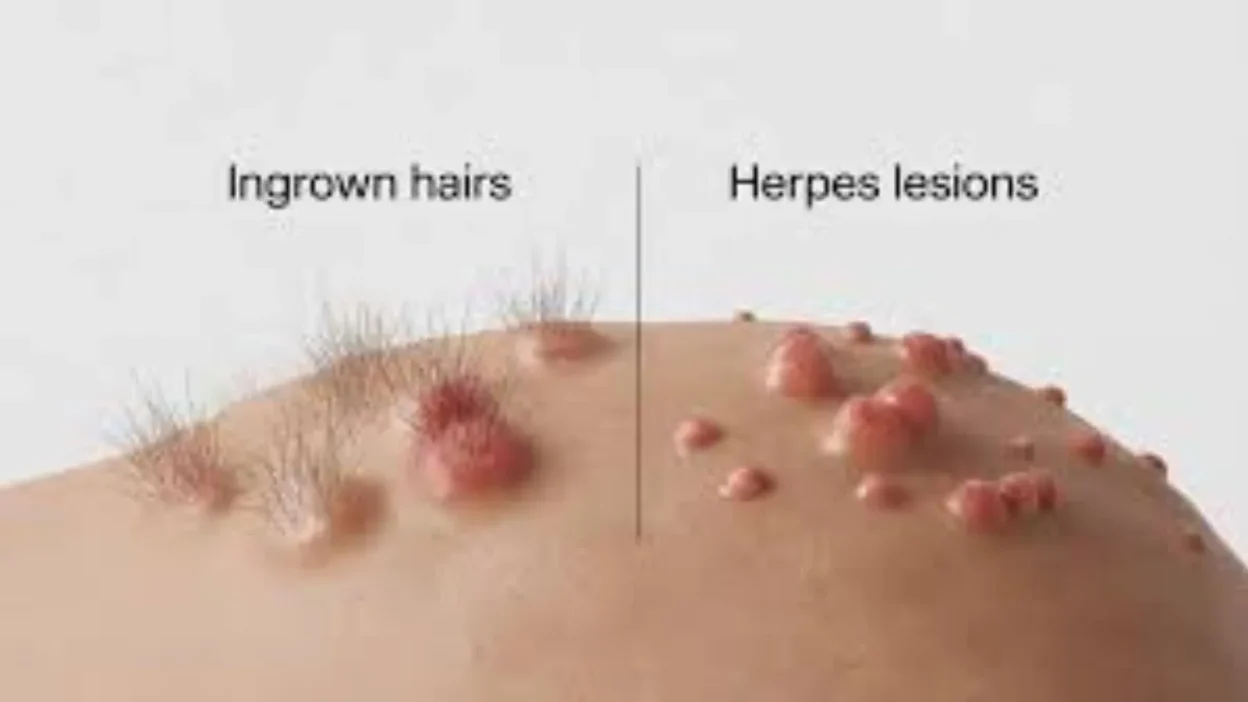
- Ingrown Hair: A hair that curls back into the skin, forming a red bump that may be painful or itchy. Often linked to shaving or waxing.
- Herpes: A viral infection (HSV-1 or HSV-2) that causes clusters of painful blisters or sores, often recurring over time.
👉 Example: A single red bump after shaving is likely an ingrown hair. A cluster of blisters in the same spot could be herpes.
The Origin of “Ingrown Hair vs Herpes”
The keyword exists because people often confuse the two conditions. Ingrown hair is a dermatological issue described for centuries, while herpes comes from the Greek word “herpein” (to creep), reflecting the way lesions spread. Online, the pairing “ingrown hair vs herpes” rose in searches due to rising awareness of sexual health and cosmetic grooming.
British English vs American English Spelling
Both terms are spelled the same in US and UK English. However, descriptions may vary:
- British English often uses phrases like “razor bump” or “follicle irritation.”
- American English more commonly uses “ingrown hair” and “cold sore” for herpes.
| Term | British English Example | American English Example |
| Ingrown Hair | “razor bump after shaving” | “ingrown hair on leg” |
| Herpes | “herpes simplex infection” | “oral herpes” or “genital herpes” |
Which Should You Use?
- If your audience is in the US → Use “ingrown hair” and “herpes.”
- If your audience is in the UK/Commonwealth → You can use “razor bumps” for casual content, but “ingrown hair” is universally understood.
- For global readers → Stick to “ingrown hair” and “herpes” for clarity.
Common Mistakes with “Ingrown Hair vs Herpes”
- Assuming all bumps are herpes – Most post-shaving bumps are ingrown hairs, not infections.
- Thinking herpes always looks severe – Sometimes early herpes outbreaks look like small pimples.
- Confusing itching causes – Ingrown hairs itch as they heal; herpes itches before blisters appear.
- Ignoring location – Ingrown hairs occur where you shave or wax; herpes can appear even without hair.
“Ingrown Hair vs Herpes” in Everyday Examples
- Emails: “I thought it was herpes, but my doctor said it was just an ingrown hair.”
- News: “Dermatologists explain how to distinguish ingrown hair vs herpes for safer skin care.”
- Social Media: “Panicked over a bump after shaving—turned out to be an ingrown hair, not herpes 😅.”
- Formal Writing: “Distinguishing between ingrown hair and herpes is essential for proper diagnosis.”
Ingrown Hair vs Herpes – Google Trends & Usage Data
Search interest shows that:
- “Ingrown hair vs herpes” is most popular in the US, UK, Canada, and Australia.
- Spikes happen during summer (more shaving/waxing) and around awareness weeks for STDs.
- In health forums, the phrase is used in panic-related questions.
| Keyword Variation | Search Popularity | Common Context |
| Ingrown hair vs herpes | High | Health forums, Google search |
| Razor bumps vs herpes | Medium | Social media posts |
| Pimple vs herpes | Medium | Teen health blogs |
FAQs
Q1. Can herpes look like an ingrown hair?
Yes, early herpes blisters may resemble small pimples or bumps, but they usually appear in clusters.
Q2. Do ingrown hairs blister like herpes?
No, ingrown hairs may form pus-filled bumps, but they do not create clusters of watery blisters like herpes.
Q3. How do I know if it’s herpes or an ingrown hair?
Location, number of bumps, and history help. A single bump after shaving is likely ingrown; recurring sores suggest herpes.
Q4. Can herpes appear where there’s no hair?
Yes. Herpes can show on skin without hair follicles, unlike ingrown hairs.
Q5. Do ingrown hairs go away on their own?
Most heal naturally within a week or two. Warm compresses and exfoliation help.
Q6. Is herpes curable?
No, but antiviral medication controls outbreaks and reduces spread.
Q7. Should I see a doctor for bumps?
Yes, if you’re unsure or if bumps keep returning. A test can confirm whether it’s herpes.
Conclusion
Understanding ingrown hair vs herpes is vital for peace of mind and proper care. While both can look similar, ingrown hairs usually result from shaving or waxing and heal with simple remedies. Herpes, however, is a viral infection that needs medical diagnosis and ongoing treatment. Remember: a single red bump is often harmless, but clusters of painful blisters require medical attention.
By recognizing symptoms, using correct terminology, and avoiding common mistakes, you can take control of your skin health. If in doubt, consult a healthcare professional for an accurate diagnosis.
Discover More Articles:
- Are Foxes Cats or Dogs? The Real Answer Explained 2026
- Super Boof Strain Indica or Sativa? Full Guide 2026
- Ripley’s Believe It or Not Panama City Beach Ultimate Visitor Guide For 2026
- 101+Ladung vs. Tankstelle vs. Rastplätzen Bedeutung und Verwendung erklärt 2026