Have you ever paused mid-sentence wondering — is it “its” or “it’s”? 🤔
You’re not alone!
Thousands of people search for “its or it’s” daily because this tiny apostrophe causes big confusion.
While both look nearly identical, using the wrong one can instantly change the meaning of your sentence.
Whether you’re writing an email, social media caption, or school essay, knowing when to use “its” vs “it’s” makes your writing look polished and professional ✍️
This guide gives you a quick answer, clear examples, grammar history, British vs. American usage differences 🇬🇧🇺🇸, and a simple trick to always get it right.
Let’s settle this once and for all! 🚀
💡 “Its or It’s” – Quick Answer
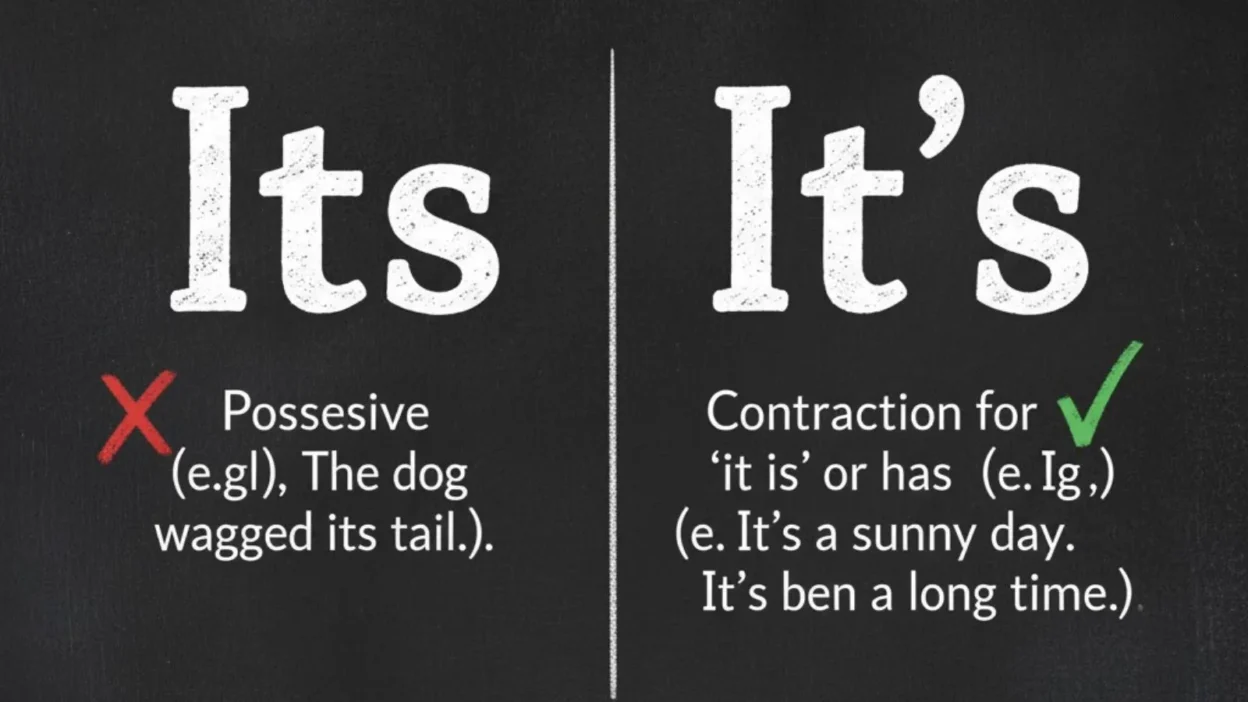
✅ “It’s” = It is or It has
✅ “Its” = Belonging to it (possessive)
👉 Examples:
- ✅ It’s raining outside. (It is)
- ✅ The cat licked its paw. (The paw belongs to the cat)
🧠 Quick Tip:
If you can replace the word with “it is” or “it has”, use it’s.
If not, use its.
💡 Its vs It’s – Quick Answer
✅ It’s = It is or It has
✅ Its = Belonging to it (possessive)
👉 Examples:
- ✅ It’s raining outside. → (It is raining outside.)
- ✅ The cat licked its paw. → (The paw belongs to the cat.)
🧠 Memory Tip:
If you can replace it with “it is” or “it has,” use it’s.
If not, use its (no apostrophe).
📜 The Origin of “Its” and “It’s”
Originally, English didn’t have “its” at all! Before the 17th century, people said things like “the cat licked his paw” even for objects 🕰️
As English evolved, we needed a gender-neutral possessive form — so “its” was born 🐾
Later, “it’s” appeared as a contraction of “it is” or “it has”, following the same rule as “he’s” (he is) or “she’s” (she is).
The confusion began because apostrophes often show possession (the dog’s bone), but here, “its” is the one big exception! ⚠️
📜 The Origin of “Its” and “It’s”
In early English, people didn’t even use “its.” 😲
They said things like “the tree dropped his leaves.” Over time, English speakers needed a neutral, non-gender possessive — that’s when “its” was introduced around the 1600s.
Later, “it’s” appeared as a contraction (short form) of “it is” and “it has.”
The confusion started because apostrophes usually show possession (like the boy’s book), but “its” breaks that rule — it’s possessive without the apostrophe! ⚠️
🇬🇧🇺🇸 British English vs American English Spelling
Both British and American English follow the same rule for “its” and “it’s” 😄 — so there’s no spelling difference!
But American writers tend to use contractions (it’s) more often in casual writing, while British English keeps formal tone and uses “it is” more in professional contexts.
| Usage Type | British English 🇬🇧 | American English 🇺🇸 |
|---|---|---|
| Formal Writing | “It is clear that…” | “It’s clear that…” |
| Informal Text | “It’s a lovely day!” | “It’s a lovely day!” |
| Business Email | “It is recommended…” | “It’s recommended…” |
🎯 Which Spelling Should You Use?
🧭 If you’re writing for:
- 🇺🇸 U.S. readers: Use it’s in casual and it is in formal contexts.
- 🇬🇧 U.K./Commonwealth: Use it is in formal and it’s in friendly writing.
- 🌍 Global audience: Keep it simple — follow the standard grammar rule, not the accent!
✅ Rule: Always remember—“it’s” = contraction, “its” = possessive.
⚠️ Common Mistakes with “Its” or “It’s”
✅ The company increased its revenue. ✅
🚫 Its been a long day. ❌
✅ It’s been a long day. ✅
🚫 The dog wagged it’s tail. ❌
✅ The dog wagged its tail. ✅
Quick Fix: Try expanding “it’s” to “it is.” If it doesn’t fit, drop the apostrophe! 💡
⚠️ Common Mistakes with Its vs It’s
✅ The company increased its revenue. ✅
✅ It’s been a long day. ✅
🚫 The dog wagged it’s tail. ❌
✅ The dog wagged its tail. ✅
🔍 Fix Trick:
If you can say “it is,” use it’s. If not — it’s its. Easy! 😄
✍️ “Its” or “It’s” in Everyday Examples
📧 Email:
- “It’s been a pleasure working with your team.”
- “Our company updated its policy.”
📰 News Headline:
- “The city updated its water system.”
- “It’s expected to rain this weekend.”
📱 Social Media:
- “It’s Friday! 😎”
- “The brand launched its new collection!”
🎓 Formal Writing:
- “The university increased its research budget.”
- “It’s essential to stay informed.”
📊 “Its or It’s” – Google Trends & Usage Data
According to Google Trends 📈:
- “It’s” is searched 30% more than “its” — mostly in the U.S.
- Searches for “its or it’s” peak during academic seasons (exams, writing months).
- The confusion is global 🌎 — with top searches coming from India, UK, U.S., and Australia.
| Country | Most Searched Term | Context |
|---|---|---|
| 🇺🇸 USA | “It’s vs Its” | Grammar learning |
| 🇬🇧 UK | “Its meaning” | Academic writing |
| 🇮🇳 India | “Its or it’s examples” | English improvement |
| 🇦🇺 Australia | “Its apostrophe rule” | Editing & writing |
❓ FAQs About “Its” or “It’s”
1️⃣ What’s the main difference between “its” and “it’s”?
👉 “It’s” = “it is” or “it has”; “its” = shows possession.
2️⃣ Is “its” ever written with an apostrophe?
❌ No. Never use an apostrophe for possession with “its.”
3️⃣ How do I check which one to use?
🧠 Replace it with “it is” — if it works, use “it’s.”
4️⃣ Why is “its” an exception to apostrophe rules?
Because “it’s” already means “it is,” so using an apostrophe for possession would be confusing.
5️⃣ Can I use “it’s” in formal writing?
✔️ You can, but “it is” sounds more professional.
6️⃣ Do British and American English use different forms?
No — both follow the same grammar rule!
7️⃣ What’s the easiest trick to remember?
👉 If you can’t say “it is,” don’t use the apostrophe.
🌈 Conclusion
Tiny as they are, “its” and “it’s” carry big importance in writing 🖊️
Mixing them up can make your sentences unclear or unprofessional. Remember:
- “It’s” = It is / It has
- “Its” = Belongs to it
Whether you’re writing a tweet, report, or essay, getting this right instantly improves your grammar confidence 💪✨
So next time you pause before typing, just ask yourself: Can I say “it is”? If yes — use it’s. If not — it’s its 😉
Discover More Articles
- 🌟 101+Lose or Loose What’s the Real Difference? 2026
- Setup or Set up Which One is Correct? 🤔2026
- Login or Log in What’s the Difference? 🤔💻 2026
- 🧩 Then or Than What’s the Difference? (Easy Guide with Examples) 2026