Are you confused about when to use “passed” or “past”? 🤔 You’re not alone!
Many people struggle with these two words because they sound similar but have very different meanings.
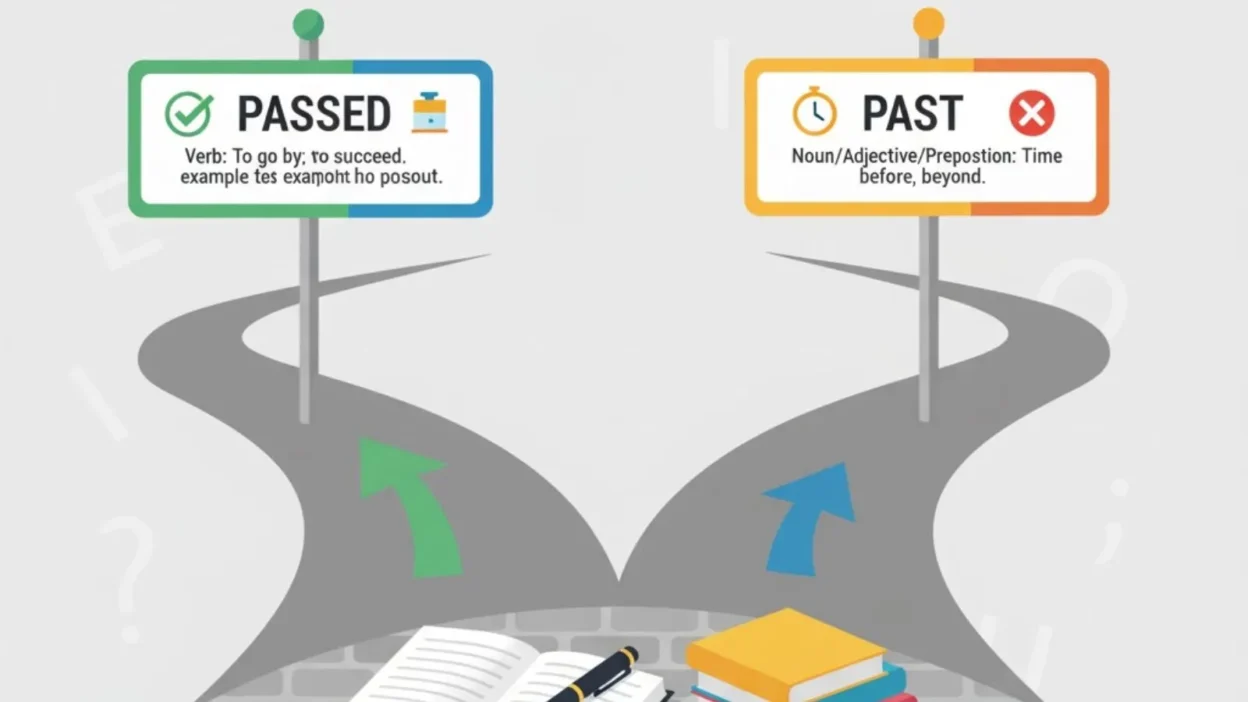
“Passed” is usually a verb, while “past” can be an adjective, noun, or preposition.
Using them incorrectly can make your writing look unprofessional, whether it’s in emails, school essays, or social media posts.
People search for “passed or past” to quickly solve this confusion. This guide will explain their differences, origins, and correct usage with simple examples.
By the end, you’ll know exactly when to type passed ✅ and when to use past ⏳, making your writing clear and confident.
Passed or Past – Quick Answer ✅❌
- Passed = Verb (action) → “She passed the exam.” ✔️
- Past = Noun/Adjective/Preposition → “He walked past the house.” ✔️
Tip: If you can replace it with “went by” or “completed,” use passed. If it shows a location, time, or something behind, use past.
The Origin of Passed or Past 📜
- Passed comes from the verb “pass”, meaning to move or go beyond.
- Past comes from Old English “paest”, meaning former or beyond.
- The spelling difference exists because one shows action (passed) and the other shows position or time (past).
Understanding the history helps remember that passed = action, past = position/time.
British English vs American English Spelling 🇬🇧🇺🇸
Interestingly, passed and past are spelled the same in both UK and US English ✅. The difference is in usage rather than spelling.
| Word | British English Usage | American English Usage | Example |
| Passed | Verb – action ✅ | Verb – action ✅ | “She passed the test.” |
| Past | Noun/Adj/Prep ✅ | Noun/Adj/Prep ✅ | “He walked past the store.” |
Note: No major spelling changes here, but remember the context rules!
Which Spelling Should You Use? 🎯
- US Audience: Follow standard rules: passed = action, past = time/location
- UK/Commonwealth: Same rules apply ✅
- Global Writing: Stick to context-based rules rather than worrying about regional differences.
Pro Tip: Think about meaning first, audience second.
Common Mistakes with Passed or Past ⚠️
- ❌ “I have past the exam.” → ✔️ “I have passed the exam.”
- ❌ “She walked passed the shop.” → ✔️ “She walked past the shop.”
- ❌ Confusing time references: “In the passed year…” → ✔️ “In the past year…”
Quick Fix: Ask yourself: Is it an action? Use passed. Is it time or location? Use past.
Passed or Past in Everyday Examples ✉️📰💬
- Email: “I have passed the report to the manager.”
- News: “The law passed yesterday in parliament.”
- Social Media: “Just walked past my old school! 😍”
- Formal Writing: “The past decade has seen major changes.”
Passed or Past – Google Trends & Usage Data 📊
- Most Searches: US, UK, India, Australia
- Peak Interest: Students, writers, ESL learners
- Context: Grammar help, proofreading, exam prep
Observation: Searches spike around school terms and exam season 📚.
Keyword Comparison Table 🔄
| Word | Type | Use Case Example | Quick Rule |
| Passed | Verb | “He passed the final test.” | Action done |
| Past | Noun/Adj/Prep | “The past year was challenging.” | Time/location |
FAQs ❓
1. Can “passed” ever be a noun?
No. Passed is always a verb (action).
2. Can “past” be a verb?
No. Past is never a verb; use passed instead.
3. How do I remember the difference?
Passed = action ✅
Past = time/location ⏳
4. Is “passed by” different from “past by”?
Yes. “Passed by” = action. “Past” alone shows position.
5. Can I use “past” in exams?
Yes, when referring to time or previous events, e.g., “In the past decade…”
6. Which is more common in writing?
Both are common, but using the correct context is key.
7. Any tricks to avoid mistakes?
Replace “passed” with “went by” in your sentence. If it makes sense, passed is correct.
Conclusion ✨
Confused about passed or past? Remember this: passed = action, past = time/location. ✅ By understanding their origins, checking usage examples, and following these simple rules, you can write confidently in emails, essays, and social media posts. Whether you’re in the US, UK, or anywhere in the world 🌍, context matters more than spelling. Avoid common mistakes like “I have past the exam” and always double-check your sentence meaning. With practice, distinguishing passed and past will become second nature. Now your writing will be polished, professional, and grammatically correct every time! ✍️
Discover More Articles
- 🌟 Everyday or Every day What’s the Real Difference? 2026
- 🌟 Lay or Lie What’s the Difference? (A Simple Grammar Guide) 2026
- ✅ Accept or Except What’s the Real Difference? 2026
- ✅ Ensure or Insure What’s the Difference & Which Should You Use? 2026